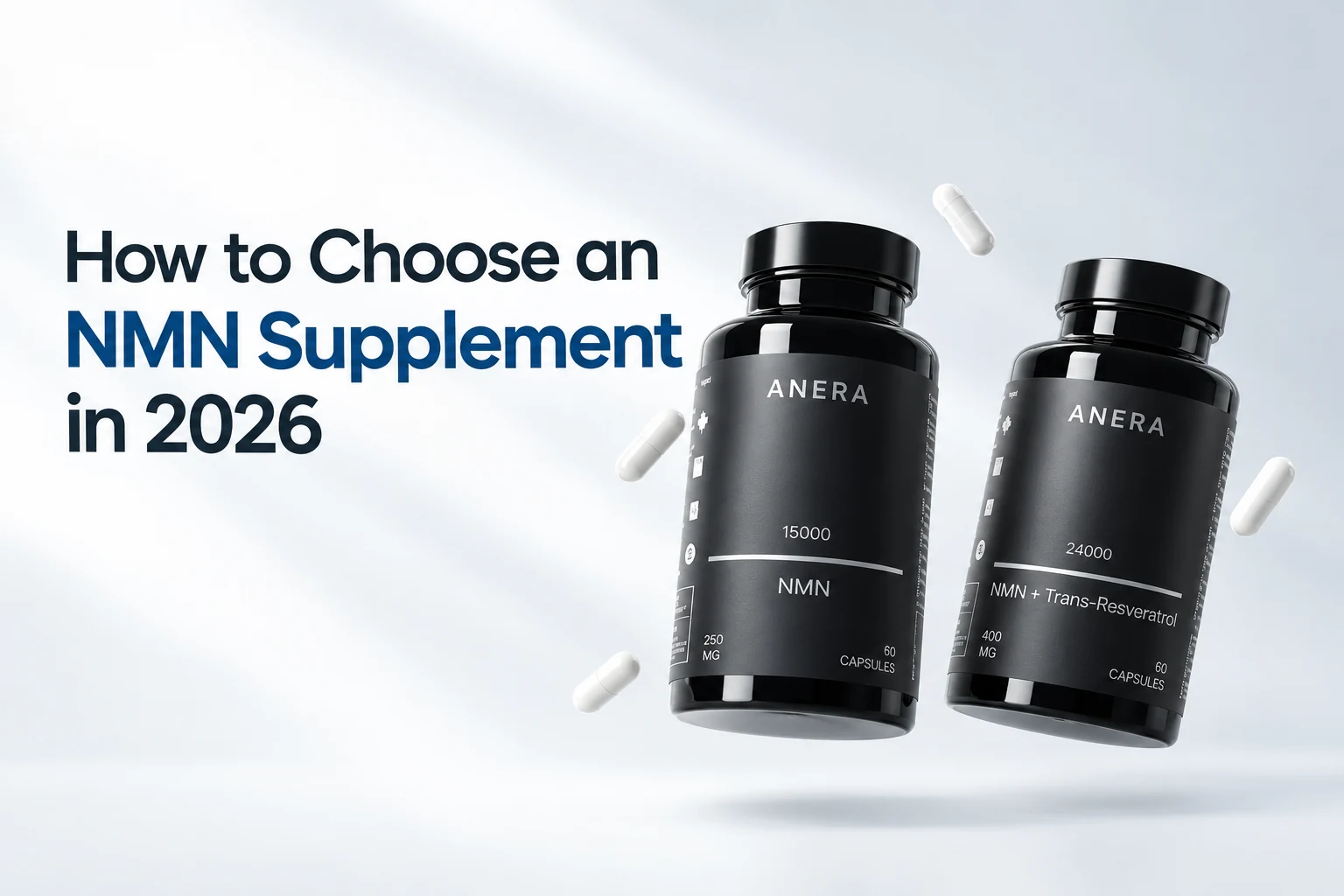
How to Choose the Best NMN Supplement: The Ultimate Buyer's Guide (2026)

The NMN supplement market has grown rapidly in recent years as more people seek ways to support healthy aging, cellular energy, and overall wellness. With increasing interest in longevity science, consumers now have access to dozens of NMN products from brands around the world.
However, not all NMN supplements are created equal.
While some companies invest in rigorous quality control, third-party testing, and transparent manufacturing practices, others focus primarily on marketing claims without providing clear evidence of product quality. As a result, choosing the right NMN supplement can be challenging, especially for first-time buyers.
The good news is that you don't need to be a scientist to evaluate an NMN supplement effectively.
By understanding a few key quality indicators including purity, testing standards, manufacturing practices, ingredient transparency, and packaging, you can make a more informed decision and avoid products that may not meet your expectations.
In this comprehensive guide, you'll learn how to assess NMN supplements like an informed consumer, understand Certificates of Analysis (COAs), identify common red flags, and discover the factors that separate premium NMN products from lower-quality alternatives.
What Is NMN and Why Are So Many People Taking It?
What Is NMN?
NMN (Nicotinamide Mononucleotide) is a naturally occurring compound that serves as a precursor to NAD+ (Nicotinamide Adenine Dinucleotide), a coenzyme found in every living cell.
NAD+ plays a critical role in numerous biological processes, including:
- Cellular energy production
- Metabolic function
- DNA repair mechanisms
- Mitochondrial health
- Cellular maintenance
Although NMN is naturally present in small amounts in foods such as broccoli, cabbage, edamame, cucumbers, and avocados, dietary intake typically provides only limited quantities. This is one reason many consumers explore NMN supplementation.
How NMN Supports NAD+ Production
To understand NMN's growing popularity, it's important to understand its relationship with NAD+.
NAD+ acts as a vital coenzyme that helps cells convert nutrients into usable energy. It also supports important cellular processes involved in maintaining normal cellular function.
When NMN is consumed, the body can convert it into NAD+, helping support the body's natural NAD+ production pathways.
Because NAD+ is involved in many essential biological functions, researchers have shown increasing interest in compounds like NMN that may help support healthy NAD+ levels.
Why NAD+ Levels Decline With Age
Research suggests that NAD+ levels naturally decline as people age. This reduction has been associated with changes in cellular energy production and other age-related biological processes.
While aging is complex and influenced by many factors, scientists continue investigating how maintaining healthy NAD+ levels may contribute to overall wellness and healthy aging.
This growing body of research has made NMN one of the most discussed ingredients in the longevity and healthy aging space.
Current Research on NMN
Scientific interest in NMN continues to expand. Researchers are currently studying NMN in areas such as:
- Healthy aging
- Cellular energy metabolism
- Mitochondrial function
- Physical performance
- Metabolic health
- Cognitive wellness
Although research is ongoing, consumers should remember that studies vary in design and outcomes. The quality of the supplement itself remains an important factor when evaluating potential benefits.
Why NMN Supplement Quality Matters More Than Most People Realize

Many consumers assume that all NMN supplements are essentially the same. After all, if the label says "NMN," shouldn't every product deliver similar quality?
Unfortunately, that's not always the case.
Not All NMN Supplements Are Manufactured the Same
The NMN industry contains products manufactured under very different quality standards.
Some brands invest heavily in:
- Pharmaceutical-grade raw materials
- Third-party laboratory testing
- GMP-certified manufacturing
- Stability testing
- Batch verification
- Transparent sourcing
Others may provide limited information about how their products are tested or manufactured.
As a result, two products that appear similar on the surface may differ significantly in quality assurance practices.
Potential Problems With Low-Quality Products
When evaluating supplements, quality concerns may include:
- Lower-than-advertised ingredient potency
- Insufficient quality testing
- Inadequate storage or packaging
- Lack of transparency
- Unverified purity claims
These issues can make it difficult for consumers to know exactly what they are purchasing.
For this reason, experienced supplement buyers often focus less on marketing claims and more on objective quality indicators.
How Product Quality Impacts Consumer Confidence
Trust plays a major role in supplement purchasing decisions.
Consumers increasingly expect brands to provide:
- Third-party testing documentation
- Certificates of Analysis (COAs)
- Clear ingredient labels
- Manufacturing information
- Transparent quality standards
Brands that openly share this information generally make it easier for consumers to evaluate product quality and make informed decisions.
This is why understanding quality markers is one of the most important skills for anyone shopping for NMN supplements.
The NMN Supplement Scorecard: 10 Factors That Matter Most

Many articles discuss NMN quality, but few provide a structured framework for evaluating products.
To simplify the buying process, use the following NMN Supplement Scorecard when comparing brands.
| Factor | Importance |
|---|---|
| Purity | 25% |
| Third-Party Testing | 20% |
| Manufacturing Quality | 15% |
| Ingredient Transparency | 10% |
| Packaging Stability | 10% |
| COA Availability | 10% |
| Brand Transparency | 5% |
| Delivery Method | 2.5% |
| Customer Support | 1.25% |
| Cost Per Gram | 1.25% |
This framework prioritizes factors that directly influence product quality and transparency.
Many consumers focus primarily on price, but experienced supplement buyers often prioritize purity, testing, manufacturing standards, and documentation before considering cost.
Throughout the rest of this guide, we'll explore each of these factors in detail.
Factor #1 — NMN Purity
When evaluating any NMN supplement, purity should be one of your highest priorities.
Purity directly affects the amount of actual NMN contained within a product and serves as an important indicator of manufacturing quality.
What Does 99%+ Pure NMN Mean?
When a supplement claims to contain 99%+ pure NMN, it generally means that laboratory testing has verified that at least 99% of the tested material consists of NMN.
Higher purity levels typically indicate:
- Better raw material quality
- More refined production processes
- Greater manufacturing precision
- Improved consistency between batches
For this reason, many premium NMN brands aim for 99% or higher purity standards.
How NMN Purity Is Tested
Purity claims should not rely solely on manufacturer statements.
Instead, reputable companies verify purity through laboratory testing.
Testing helps confirm:
- NMN identity
- NMN concentration
- Product consistency
- Potential contaminants
Consumers should look for evidence that purity has been independently verified rather than simply advertised.
HPLC Testing Explained
One of the most commonly used methods for evaluating supplement purity is High-Performance Liquid Chromatography (HPLC).
HPLC is a laboratory technique that helps scientists:
- Identify compounds
- Measure concentrations
- Verify purity levels
- Detect impurities
When consumers see HPLC results included within a Certificate of Analysis (COA), it provides additional confidence that purity claims are supported by testing data.
Why Purity Matters
Purity is important because it helps consumers understand how much NMN they are actually receiving.
Higher-purity products generally offer:
- More precise dosing
- Greater consistency
- Better quality assurance
- Stronger transparency standards
Purity alone doesn't determine overall quality, but it is one of the most important factors to evaluate.
Should Consumers Accept 95%, 98%, or 99%?
Many consumers wonder whether small differences in purity percentages matter.
In general:
- 95% purity may be acceptable but leaves more room for other compounds.
- 98% purity is generally considered high quality.
- 99%+ purity is often regarded as the premium benchmark among leading NMN brands.
When possible, consumers should choose products that provide documented purity verification through independent testing and publicly available Certificates of Analysis.
What Purity Should NMN Be?
Most high-quality NMN supplements provide 99%+ purity verified through third-party laboratory testing and Certificates of Analysis (COAs). When comparing products, consumers should prioritize verified purity rather than relying solely on marketing claims.
Factor #2 — Third-Party Testing
One of the most important indicators of supplement quality is third-party testing.
Many supplement brands test their own products internally, but independent verification provides an additional layer of transparency and consumer confidence. Since consumers cannot visually verify purity, potency, or contaminants, laboratory testing plays a critical role in quality assurance.
Why Independent Testing Matters
Third-party testing means that an independent laboratory evaluates the product rather than relying solely on the manufacturer's internal testing processes.
This helps verify that:
- The product contains the ingredients listed on the label
- The ingredient levels match label claims
- Contaminants remain within acceptable limits
- Quality standards are consistently maintained
Independent verification can help reduce uncertainty and provide consumers with objective testing data.
Manufacturer Testing vs. Third-Party Testing
Many reputable manufacturers perform internal quality testing during production. While this is an important part of quality control, third-party testing provides an additional level of accountability.
| Manufacturer Testing | Third-Party Testing |
|---|---|
| Conducted by the company | Conducted by an independent laboratory |
| Supports internal quality control | Provides external verification |
| Useful for production monitoring | Helps improve transparency |
| Not always publicly shared | Often available through COAs |
The strongest quality programs often combine both internal and third-party testing.
What Third-Party Labs Actually Verify
Independent laboratories may evaluate several quality markers, including:
Identity Testing
Confirms that the ingredient is actually NMN and not another compound.
Potency Testing
Measures the amount of NMN present in the finished product.
Heavy Metal Testing
Screens for contaminants such as:
- Lead
- Arsenic
- Mercury
- Cadmium
- Microbial Testing
Evaluates potential contamination from:
- Yeast
- Mold
- Bacteria
- Other microorganisms
- Residual Solvent Testing
Verifies that manufacturing solvents, if used during production, remain within acceptable limits.
What Consumers Should Look For
When evaluating NMN supplements, look for evidence that testing includes:
- ✔ Identity verification
- ✔ Potency verification
- ✔ Heavy metal screening
- ✔ Microbial testing
- ✔ Batch-specific analysis
- ✔ Third-party laboratory involvement
Brands that openly share testing documentation often make it easier for consumers to evaluate product quality.
Factor #3 — How to Read an NMN Certificate of Analysis (COA)
One of the biggest mistakes consumers make is ignoring the Certificate of Analysis, commonly called a COA.
A COA can provide more insight into product quality than almost any marketing page.
Yet many buyers have never been shown how to read one.
What Is a COA?
A Certificate of Analysis is a laboratory document that summarizes testing results for a specific batch of a product.
Think of it as a quality report card.
It helps verify:
- Product identity
- Purity levels
- Potency
- Safety testing
- Quality control results
For NMN supplements, a COA can be one of the strongest indicators of transparency.
Where to Find a COA
Transparent brands often make COAs available through:
- Product pages
- Quality assurance pages
- Customer support requests
- QR codes on packaging
If a company refuses to provide any testing documentation, consumers should proceed carefully.
6 Things Every NMN COA Should Include
1. Batch Number
A batch number identifies the specific production run that was tested.
This helps ensure traceability and quality control.
2. Testing Date
Testing should be reasonably recent and relevant to the batch being sold.
3. NMN Purity Percentage
Look for clearly reported purity results.
Many premium NMN products target 99%+ purity.
4. Heavy Metal Results
The COA should indicate that heavy metals have been evaluated and meet established specifications.
5. Microbial Testing Results
Testing should confirm that microbial levels remain within acceptable limits.
6. Independent Laboratory Information
A credible COA should clearly identify the laboratory that performed the testing.
Warning Signs of a Weak COA
Be cautious if you notice:
- Missing laboratory information
- No purity percentage listed
- No batch number
- Undated reports
- Generic documents reused across multiple products
- Missing contaminant testing
Transparency is most valuable when documentation is complete and easy to verify.
Example COA Walkthrough
When reviewing a COA, ask yourself:
- Is the batch number visible?
- Is the testing date current?
- Is NMN purity clearly reported?
- Are contaminant tests included?
- Is the testing laboratory identified?
- Does the report appear complete?
If the answer to several of these questions is "no," further investigation may be warranted.
Factor #4 — Manufacturing Standards
Manufacturing quality often receives less attention than purity or dosage, yet it plays a major role in product consistency and safety.
Even a high-quality ingredient can be compromised if manufacturing standards are poor.
What Is GMP Certification?
GMP stands for Good Manufacturing Practices.
GMP standards are designed to help ensure that supplements are produced under controlled conditions with documented quality procedures.
GMP guidelines typically address:
- Facility cleanliness
- Production controls
- Equipment maintenance
- Employee training
- Record keeping
- Product traceability
These systems help reduce the risk of errors during production.
Why GMP Matters
GMP-certified manufacturing provides greater confidence that products are made according to established quality procedures.
Benefits may include:
- Improved batch consistency
- Better documentation
- Reduced contamination risks
- More reliable production processes
- Enhanced quality oversight
For consumers, GMP certification serves as an important trust signal.
How GMP Facilities Reduce Risk
Quality-focused facilities often implement systems that help minimize:
- Ingredient mix-ups
- Labeling errors
- Cross-contamination
- Production inconsistencies
- Documentation issues
Although no manufacturing system is perfect, GMP standards provide a structured framework for maintaining quality.
Questions Consumers Should Ask Manufacturers
Before purchasing an NMN supplement, consider asking:
- Is the product manufactured in a GMP-certified facility?
- Are quality control procedures documented?
- Is batch testing performed?
- Are production records maintained?
- Is manufacturing information publicly available?
Brands willing to answer these questions often demonstrate a stronger commitment to transparency.
Factor #5 — Ingredient Transparency

A supplement label should help consumers understand exactly what they are purchasing.
Unfortunately, not all labels provide the same level of transparency.
The Problem With Proprietary Blends
Some supplements use proprietary blends that combine multiple ingredients under a single label listing.
This can make it difficult to determine:
- Individual ingredient amounts
- Actual NMN content
- Product value
- Ingredient effectiveness
For NMN supplements, many consumers prefer clearly disclosed ingredient amounts rather than proprietary formulations.
Ingredients That Add Value
Depending on the formulation, some products may include complementary ingredients that support overall product design.
Examples may include:
- Capsule ingredients required for delivery
- Stability-supporting components
- Clearly disclosed supporting nutrients
The key is transparency rather than complexity.
Ingredients That Add Cost but Little Benefit
Consumers should evaluate whether additional ingredients serve a meaningful purpose or simply increase marketing appeal.
More ingredients do not automatically mean better quality.
In many cases, simple, well-formulated NMN products offer excellent transparency and straightforward dosing.
Common Fillers Found in Supplements
Not all fillers are harmful, but consumers should understand what is included in a product.
Common examples include:
- Magnesium stearate
- Rice flour
- Silicon dioxide
- Cellulose
Quality-focused brands typically disclose all ingredients clearly and avoid unnecessary additives whenever possible.
What Ingredient Transparency Looks Like
A transparent NMN supplement typically provides:
- ✔ Clearly listed NMN content
- ✔ Complete ingredient disclosure
- ✔ No hidden proprietary blends
- ✔ Transparent serving information
- ✔ Accessible testing documentation
Consumers should never have to guess what is inside a supplement.
Factor #6 — Understanding NMN Delivery Methods
NMN supplements are available in several forms, each with its own advantages and considerations.
Understanding these delivery methods can help consumers choose a format that aligns with their preferences and lifestyle.
Capsules
Capsules remain one of the most popular NMN formats.
Advantages:
- Convenient
- Easy to transport
- Consistent dosing
- Widely available
Many consumers prefer capsules because they simplify daily supplementation.
Powders
NMN powder provides flexibility in dosing.
Advantages:
- Adjustable serving sizes
- Often lower cost per gram
- Minimal additional ingredients
However, powders may require measuring and can be less convenient for travel.
Delayed-Release Formulas
Some manufacturers offer delayed-release capsules designed to control ingredient release over time.
Potential benefits may include:
- Enhanced convenience
- Specialized delivery systems
- Product differentiation
Research in this area continues to evolve.
Sublingual Products
Sublingual products are designed to dissolve under the tongue.
Advantages:
- Alternative delivery option
- Popular among some consumers
Research comparing delivery methods remains ongoing.
Liposomal NMN
Liposomal products use lipid-based delivery systems intended to encapsulate active ingredients.
Advantages:
- Innovative formulation approach
- Growing market interest
However, consumers should evaluate scientific evidence and testing documentation carefully when assessing these products.
What Human Research Has Actually Studied
Most published NMN research has primarily focused on standard oral NMN supplementation.
As new delivery technologies emerge, additional research may provide greater insight into how different formats compare.
Consumers should focus on quality, transparency, and testing rather than assuming one delivery method is automatically superior.
NMN Delivery Method Comparison
| Form | Convenience | Research Support | Cost |
|---|---|---|---|
| Capsule | High | Strong | Moderate |
| Powder | Moderate | Strong | Lower |
| Delayed Release | High | Emerging | Higher |
| Liposomal | Moderate | Limited | Higher |
At the end of the day, the best delivery method is often the one that combines quality, consistency, transparency, and ease of use for your individual needs.
Looking for a High-Quality NMN Supplement?
Before choosing any NMN product, review its purity testing, COA availability, manufacturing standards, ingredient transparency, and delivery format.
Anera Life follows a quality-first approach with pharmaceutical-grade NMN, third-party testing, GMP manufacturing standards, clean formulations, and transparent quality documentation designed to help consumers make informed decisions.
Factor #7 — Packaging and Stability
When evaluating NMN supplements, most consumers focus on purity, dosage, and testing. However, packaging and stability are equally important considerations that can influence product quality over time.
Even a highly pure NMN ingredient can lose value if it is not stored and protected properly.
Why NMN Stability Matters
NMN is a sensitive compound that should be protected from environmental factors during manufacturing, storage, shipping, and everyday use.
Quality-focused brands invest in packaging solutions designed to help preserve product integrity throughout its shelf life.
When evaluating supplements, it's worth considering how a product is packaged, not just what's inside the bottle.
How Heat Impacts NMN
Excessive heat can affect many nutritional compounds over time.
This is why responsible supplement manufacturers often recommend:
- Storing products in a cool, dry place
- Avoiding prolonged exposure to direct sunlight
- Keeping products away from heat sources
Products that are shipped and stored carefully are generally better positioned to maintain their intended quality.
How Moisture Impacts NMN
Moisture is another factor that may affect supplement stability.
Exposure to humidity can potentially impact:
- Capsule integrity
- Powder consistency
- Product freshness
This is one reason many premium supplements include:
- Airtight seals
- Desiccant packets
- Moisture-resistant packaging
- How Light Exposure Impacts NMN
Light exposure can affect the stability of certain nutritional compounds.
To help minimize exposure, quality-conscious manufacturers often use:
- Opaque containers
- UV-protective packaging
- Dark glass bottles
These packaging choices may help better protect sensitive ingredients during storage.
Glass vs. Plastic Bottles
Both glass and plastic packaging are commonly used in the supplement industry.
However, many premium brands prefer glass because it may provide advantages such as:
- Enhanced protection from environmental factors
- Reduced permeability
- Premium storage quality
- Better long-term durability
Plastic remains widely used, but consumers evaluating premium supplements often view glass packaging as a positive quality signal.
Why UV-Protected Packaging Is Important
UV exposure can contribute to degradation in some ingredients.
UV-protected packaging helps reduce direct light exposure and supports long-term product stability.
When comparing NMN brands, packaging quality should be considered alongside purity and testing standards.
Shelf-Life Considerations
Consumers should always check:
- Expiration dates
- Storage recommendations
- Packaging quality
- Product condition upon arrival
A supplement's quality is not determined solely by manufacturing. It also depends on how well that quality is preserved until the product is used.
Factor #8 — Cost Per Gram Analysis
One of the biggest mistakes consumers make when comparing NMN supplements is focusing only on bottle price.
A lower-priced product isn't necessarily a better value.
Why Price Alone Is Misleading
Consider the following example:
Product A costs $50.
Product B costs $70.
At first glance, Product A appears to be the better deal.
However, if Product B contains significantly more NMN, it may actually provide a lower cost per gram and better long-term value.
This is why experienced supplement buyers often evaluate cost per gram rather than bottle price.
How to Calculate Cost Per Gram
The formula is simple:
Cost Per Gram = Product Price ÷ Total NMN Content (grams)
For example:
- Product Price = $60
- Total NMN Content = 30 grams
- Cost Per Gram = $2 per gram
This calculation allows consumers to compare products more accurately.
Example Cost Per Gram Comparison
| Product | Price | Total NMN | Cost Per Gram |
|---|---|---|---|
| Example A | $45 | 15g | $3.00 |
| Example B | $75 | 30g | $2.50 |
| Example C | $95 | 45g | $2.11 |
Although Example C has the highest purchase price, it provides the lowest cost per gram.
When Higher Prices Are Actually Worth It
Price should never be evaluated in isolation.
A higher-priced NMN supplement may justify its cost if it offers:
- 99%+ purity
- Third-party testing
- Public COAs
- GMP manufacturing
- Premium packaging
- Strong customer support
Consumers should consider overall value rather than choosing products solely based on price.
Factor #9 — Brand Transparency

In today's supplement market, transparency is becoming one of the most important trust signals.
Consumers increasingly expect brands to openly share information about sourcing, testing, manufacturing, and quality control.
What Transparent Brands Share Publicly
Trustworthy supplement companies often provide information about:
- Manufacturing standards
- Testing procedures
- Ingredient sourcing
- Quality assurance practices
- Product documentation
The easier it is to access this information, the easier it becomes to evaluate a product objectively.
Manufacturing Information
Consumers should be able to learn:
- Where products are manufactured
- Whether facilities follow GMP standards
- What quality systems are in place
Brands that openly discuss manufacturing practices often demonstrate greater confidence in their products.
Testing Documentation
Testing documentation may include:
- Certificates of Analysis
- Third-party testing reports
- Quality assurance policies
- Batch verification procedures
Publicly accessible documentation is generally a positive indicator of transparency.
Sourcing Information
Consumers increasingly want to know:
- Where ingredients originate
- How ingredients are produced
- What quality controls are used
Transparent sourcing practices help consumers make informed purchasing decisions.
Customer Support Accessibility
A quality supplement company should be easy to contact.
Look for:
- Responsive customer support
- Clear contact information
- Educational resources
- Transparent policies
Companies that prioritize customer communication often build stronger long-term trust.
Factor #10 — Company Reputation
Reputation should never be the sole factor when choosing an NMN supplement, but it can provide useful context.
What Reviews Can Tell You
Customer reviews may offer insight into:
- User experience
- Shipping quality
- Packaging quality
- Customer service responsiveness
- Product consistency
Reviews can help identify recurring patterns that deserve attention.
What Reviews Cannot Tell You
Reviews cannot reliably verify:
- Purity
- Potency
- Manufacturing quality
- Contaminant testing
- Ingredient identity
Only laboratory testing can provide objective verification of these factors.
This is why reviews should complement quality documentation, not replace it.
Why Transparency Matters More Than Marketing
Marketing messages are designed to attract attention.
Transparency is designed to build trust.
When comparing brands, prioritize:
- Testing documentation
- Manufacturing standards
- Ingredient disclosure
- Public quality information
These factors often provide more meaningful insights than promotional claims alone.
12 Red Flags That Suggest a Low-Quality NMN Supplement
Knowing what to avoid can be just as valuable as knowing what to look for.
The following warning signs may indicate that further investigation is warranted before purchasing a product.
1. No COA Available
If a company refuses to provide testing documentation, consumers have limited ability to verify quality claims.
2. No Third-Party Testing
Independent verification is an important transparency signal.
3. Vague Ingredient Lists
Consumers should always know exactly what they are purchasing.
4. Unrealistic Claims
Be cautious of products that promise dramatic or guaranteed outcomes.
5. No Manufacturing Information
Reputable brands typically disclose manufacturing standards.
6. No Purity Verification
Purity claims should be supported by testing data.
7. No Batch Testing
Batch-specific verification helps demonstrate consistency.
8. Suspiciously Low Prices
Extremely low pricing may raise questions about sourcing, testing, or quality controls.
9. No Contact Information
Consumers should be able to contact a company easily.
10. No Stability Testing Discussion
Brands focused on quality often discuss storage and stability considerations.
11. No Transparency About Sourcing
A lack of sourcing information may make evaluation more difficult.
12. Heavy Reliance on Marketing Buzzwords
Terms like "revolutionary," "miracle," or "breakthrough" should never replace objective quality data.
The Science Behind NMN: How to Evaluate Research Claims
Scientific research is one reason NMN has attracted so much attention.
However, consumers should understand that not all evidence carries the same weight.
Learning how to evaluate research can help separate evidence-based information from marketing hype.
Human Clinical Studies
Human clinical studies generally provide the strongest evidence for understanding how a supplement may perform in real-world settings.
Researchers often evaluate:
- Safety
- Tolerability
- Biological markers
- Health-related outcomes
When reviewing NMN claims, human data should typically receive the greatest attention.
Animal Studies
Animal research often serves as an important early step in scientific investigation.
These studies can help researchers:
- Explore biological mechanisms
- Generate hypotheses
- Identify areas for future study
However, animal results do not always translate directly to humans.
Laboratory Research
Laboratory studies help scientists understand how compounds interact with cells and biological systems.
Although valuable, laboratory findings represent an early stage of evidence and should be interpreted within a broader scientific context.
Observational Data
Observational research examines associations and patterns rather than direct cause-and-effect relationships.
While useful, observational studies generally provide weaker evidence than controlled clinical trials.
Marketing Claims vs. Scientific Evidence
When evaluating NMN products, ask:
- Is the claim supported by published research?
- Does the research involve humans?
- Is the claim accurately represented?
- Does the company provide references?
The strongest brands typically focus on transparency and education rather than exaggerated promises.
Looking Beyond the Hype
A quality NMN supplement should be supported by more than attractive marketing.
Consumers should evaluate:
- ✔ Purity
- ✔ Third-party testing
- ✔ COAs
- ✔ Manufacturing standards
- ✔ Transparency
- ✔ Scientific credibility
Brands such as Anera Life emphasize transparency, quality verification, and responsible consumer education so customers can make informed decisions based on evidence rather than hype.
15 Questions to Ask Before Buying Any NMN Supplement
Before purchasing an NMN supplement, take a few minutes to evaluate the product using the checklist below. These questions can help you identify brands that prioritize quality, transparency, and consumer trust.
NMN Buyer Checklist
- ✔ Is the product third-party tested?
- ✔ Is a Certificate of Analysis (COA) publicly available?
- ✔ Is the NMN purity clearly verified?
- ✔ Does the product provide 99%+ pure NMN?
- ✔ Is the supplement manufactured in a GMP-certified facility?
- ✔ Are heavy metals tested?
- ✔ Is microbial testing performed?
- ✔ Is batch-specific testing available?
- ✔ Are all ingredients clearly disclosed?
- ✔ Does the brand avoid proprietary blends?
- ✔ Is the packaging designed to support product stability?
- ✔ Does the company disclose manufacturing information?
- ✔ Is ingredient sourcing discussed openly?
- ✔ Is customer support easy to contact?
- ✔ Does the brand provide educational resources rather than relying solely on marketing claims?
The more "yes" answers you find, the more confidence you can generally have in a product's transparency and quality standards.
What Makes a High-Quality NMN Supplement?
After evaluating dozens of NMN products, one thing becomes clear:
The best NMN supplement isn't necessarily the cheapest, most popular, or most heavily advertised.
Instead, quality products tend to share several key characteristics.
High-Quality NMN Supplement Checklist
A premium NMN supplement should ideally provide:
- ✔ 99%+ purity
- ✔ Third-party testing
- ✔ Public Certificates of Analysis (COAs)
- ✔ GMP-certified manufacturing
- ✔ Transparent sourcing information
- ✔ Stability-focused packaging
- ✔ Clear ingredient labeling
- ✔ Reasonable cost per gram
- ✔ Strong customer support
- ✔ Consistent quality standards
When multiple quality indicators align, consumers can make purchasing decisions with greater confidence.
Why Health-Conscious Consumers Choose Anera Life for NMN

Choosing an NMN supplement often comes down to trust, transparency, and quality assurance.
Anera Life was built around a simple philosophy: consumers deserve clear information about the supplements they purchase.
99%+ Pharmaceutical-Grade NMN
Anera Life uses pharmaceutical-grade NMN formulated to meet high purity standards.
Third-Party Testing
Independent testing helps verify product quality and provides additional transparency for consumers.
GMP Manufacturing Standards
Products are manufactured according to GMP quality standards designed to support consistency and quality control.
Transparent Documentation
Anera Life believes consumers should have access to the information needed to evaluate supplement quality confidently.
Clean Formulations
Products are formulated with simplicity and transparency in mind, avoiding unnecessary complexity whenever possible.
UV-Protected Packaging
Quality packaging is used to help support product stability and long-term freshness.
Commitment to Consumer Education
Beyond products, Anera Life is committed to helping consumers understand NMN, NAD+, supplement quality standards, and evidence-based wellness information.
Frequently Asked Questions
What should I look for in an NMN supplement?
Look for 99%+ purity, third-party testing, GMP-certified manufacturing, transparent ingredient labeling, publicly available COAs, and quality-focused packaging. These factors can help consumers evaluate overall product quality.
Are all NMN supplements the same?
No. NMN supplements can vary significantly in purity, testing standards, manufacturing quality, ingredient transparency, packaging, and documentation. Comparing these factors can help identify higher-quality products.
How much NMN should I take?
NMN intake varies based on individual goals, health considerations, and product formulations. Consumers should follow product directions and consult a qualified healthcare professional when appropriate.
Where can I buy NMN supplements?
NMN supplements are available through online retailers, brand websites, and specialty wellness stores. When purchasing, prioritize brands that provide transparency regarding testing, purity, and manufacturing standards.
How do I compare NMN brands?
Compare brands based on: Purity verification, Third-party testing, COA availability, Manufacturing standards, Ingredient transparency, Packaging quality, Cost per gram and Brand reputation.
What are the signs of a low-quality NMN supplement?
Potential warning signs include: No COA available, No third-party testing, Vague ingredient labels, No manufacturing information, No purity verification, Unrealistic marketing claims and Suspiciously low pricing.

Ready to Choose a High-Quality NMN Supplement?
If you're looking for an NMN brand committed to transparency, pharmaceutical-grade purity, third-party testing, GMP manufacturing, and quality-first standards, explore Anera Life's NMN collection.
Shop Premium NMN Supplements from Anera Life