Can You Take NMN at Night? Best Timing for Energy & Sleep
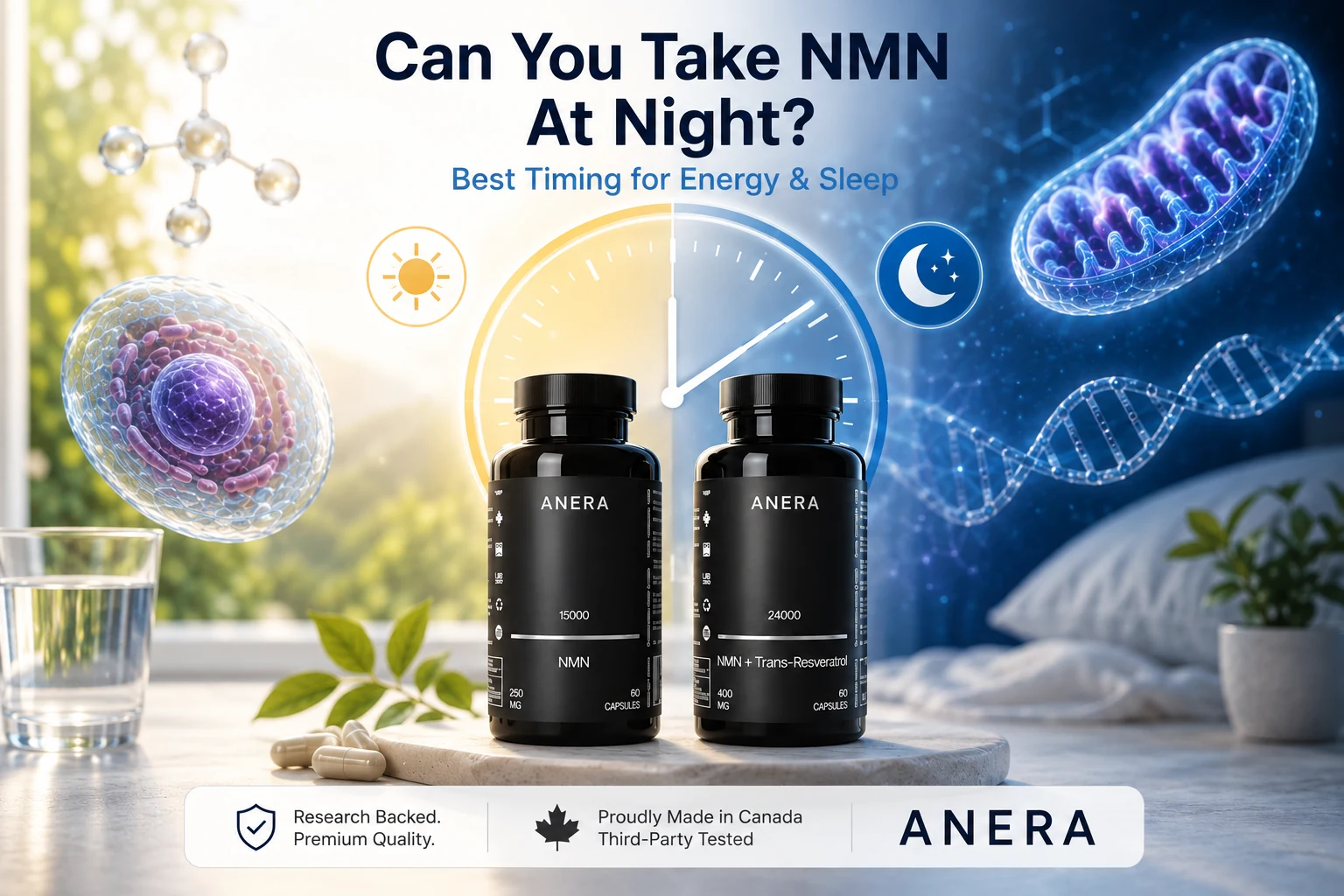
Yes, NMN can be taken at night, but nighttime may not be the ideal timing for everyone. The best time to take NMN depends on your daily routine, goals, and individual response.
NMN (nicotinamide mononucleotide) is a precursor involved in the body's production of NAD⁺ (nicotinamide adenine dinucleotide). NAD⁺ plays an important role in cellular energy metabolism and several other biological processes. Because NAD⁺ metabolism is also connected with the body's circadian system, researchers are increasingly interested in whether the timing of NMN supplementation matters.
For many people, taking NMN in the morning is a practical starting point, especially when daytime energy metabolism is the primary focus. Early afternoon can also be a convenient alternative. Evening or nighttime use may work well for some individuals, but people who notice changes in alertness or sleep may prefer taking NMN earlier.
Importantly, current human evidence does not establish that taking NMN at night universally harms sleep, nor does it prove that morning dosing is best for everyone.
This guide explores when to take NMN, whether NMN before bed is appropriate, and how morning, afternoon, and nighttime timing may fit into a consistent wellness routine.
Can You Take NMN at Night?
Yes, you can take NMN at night, but that does not necessarily mean bedtime is the best choice for everyone. Current research has not established a universal rule that NMN must be taken in the morning or that nighttime use is harmful.
The interest in NMN timing comes partly from its role in NAD⁺ metabolism. NMN is involved in the pathway used to produce NAD⁺, while NAD⁺ metabolism interacts with cellular energy processes and circadian biology.
But Nighttime May Not Be the Best Choice for Everyone
There is currently no strong human evidence showing that taking NMN immediately before bed is universally harmful to sleep. At the same time, there is not enough evidence to recommend bedtime NMN specifically for improving sleep.
Individual response can also vary. If you take NMN later in the day and notice increased alertness or changes in your usual sleep pattern, moving it to the morning may be a reasonable adjustment. If you tolerate evening dosing without noticeable changes, there may not be a compelling reason to change your schedule simply because you take NMN at night.
It is also important to distinguish taking NMN at night from taking NMN immediately before bed. An evening dose taken several hours before sleep is not necessarily the same as taking it minutes before bedtime.
What Does the Current Research Actually Tell Us?
Research supports NMN's role as a precursor in NAD⁺ metabolism, and human studies have investigated its effects on NAD-related measures and other physiological outcomes. However, evidence specifically comparing morning, afternoon, and bedtime NMN remains limited.
What remains uncertain is whether morning NMN is definitively superior to nighttime NMN or whether bedtime use meaningfully affects sleep.
For that reason, claims such as "NMN keeps you awake" are too definitive. A more accurate approach is to recognize that some individuals may prefer earlier dosing if they notice increased alertness later in the day.
Why Does NMN Timing Matter?

NMN timing is interesting because NAD⁺ is involved in cellular energy metabolism and is interconnected with circadian biology.
A simplified pathway is:
NMN → NAD⁺ → cellular energy and metabolic processes
NAD⁺ participates in numerous cellular reactions, including processes related to energy metabolism, mitochondrial function, cellular signaling, DNA repair, and sirtuin activity.
The body's circadian rhythm also influences daily patterns in metabolism and cellular activity. NAD⁺ metabolism is connected with clock-regulating pathways involving factors such as NAMPT, CLOCK, and BMAL1.
However, one distinction is essential:
Biological rationale does not equal clinical proof.
The fact that NAD⁺ biology interacts with circadian rhythms does not prove that taking NMN at 7 AM will produce better long-term outcomes than taking it at 8 PM. It simply provides a scientific reason for researchers to investigate whether timing matters.
For consumers, the practical takeaway is simple: choose a consistent timing that fits your routine, monitor how you respond, and avoid assuming there is one universally perfect hour for NMN.
NMN in the Morning vs. Afternoon vs. Night
One of the most common questions people ask is whether NMN should be taken in the morning, afternoon, or evening. While there is no universally proven best time to take NMN, each option has potential advantages and considerations.
| Timing | Potential Advantages | Potential Considerations |
|---|---|---|
| Morning | Fits naturally into most daily routines; aligns with active daytime hours | May not suit every schedule |
| Early Afternoon | Convenient for people with later mornings or shift work | Easier to forget than a morning routine |
| Evening | May fit some lifestyles better | Some individuals may prefer earlier dosing if they notice increased alertness |
| Right Before Bed | Easy to remember as part of a bedtime routine | Less ideal if sleep quality appears affected |
Morning NMN
Morning is the most commonly recommended time for NMN supplementation. One reason is practicality. Many people already take supplements with breakfast or shortly after waking, making consistency easier.
There is also a biological rationale behind morning dosing. Because daytime is typically associated with higher levels of activity, some researchers believe aligning NMN supplementation with the body's active phase may make sense from a circadian perspective.
However, it is important to remember that this remains a theory rather than a proven clinical advantage. While morning use is a sensible starting point, current evidence does not establish that it is universally superior for all individuals.
Afternoon NMN
For people who dislike taking supplements first thing in the morning, early afternoon can be a practical alternative.
Interestingly, some human research comparing morning and afternoon NMN administration found differences in certain measured outcomes. However, these findings do not provide enough evidence to declare one specific time as the best choice for everyone.
The biggest advantage of afternoon dosing is flexibility. If your mornings are rushed or inconsistent, taking NMN later in the day may improve adherence to your routine.
Nighttime NMN
Can you take NMN at night? Yes.
For some individuals, evening supplementation fits naturally into their daily schedule and causes no noticeable issues. Current research does not establish that taking NMN at night is inherently harmful.
That said, some people may prefer earlier dosing if they feel more comfortable doing so. If you notice changes in your sleep habits or feel unusually alert later in the evening, experimenting with a morning schedule may be worthwhile.
The key is to avoid assuming that nighttime NMN automatically causes sleep problems. Individual responses vary, and evidence remains limited.
NMN Immediately Before Bed
A common mistake is treating "NMN at night" and "NMN before bed" as the same thing.
In reality, they can be very different.
Taking NMN with dinner at 7 PM is not the same as taking it at 11 PM moments before falling asleep. This distinction is often overlooked in discussions about NMN timing and sleep.
If you prefer evening supplementation, consider taking NMN earlier in the evening rather than immediately before bedtime. This approach allows you to evaluate how your body responds while maintaining a consistent schedule.
Building a Daily NMN Routine?
Whether you prefer morning, afternoon, or evening supplementation, consistency is often more important than chasing the perfect hour. Explore Anera Life NMN formulas to find a simple option that fits naturally into your daily wellness routine.
Can NMN Affect Sleep?
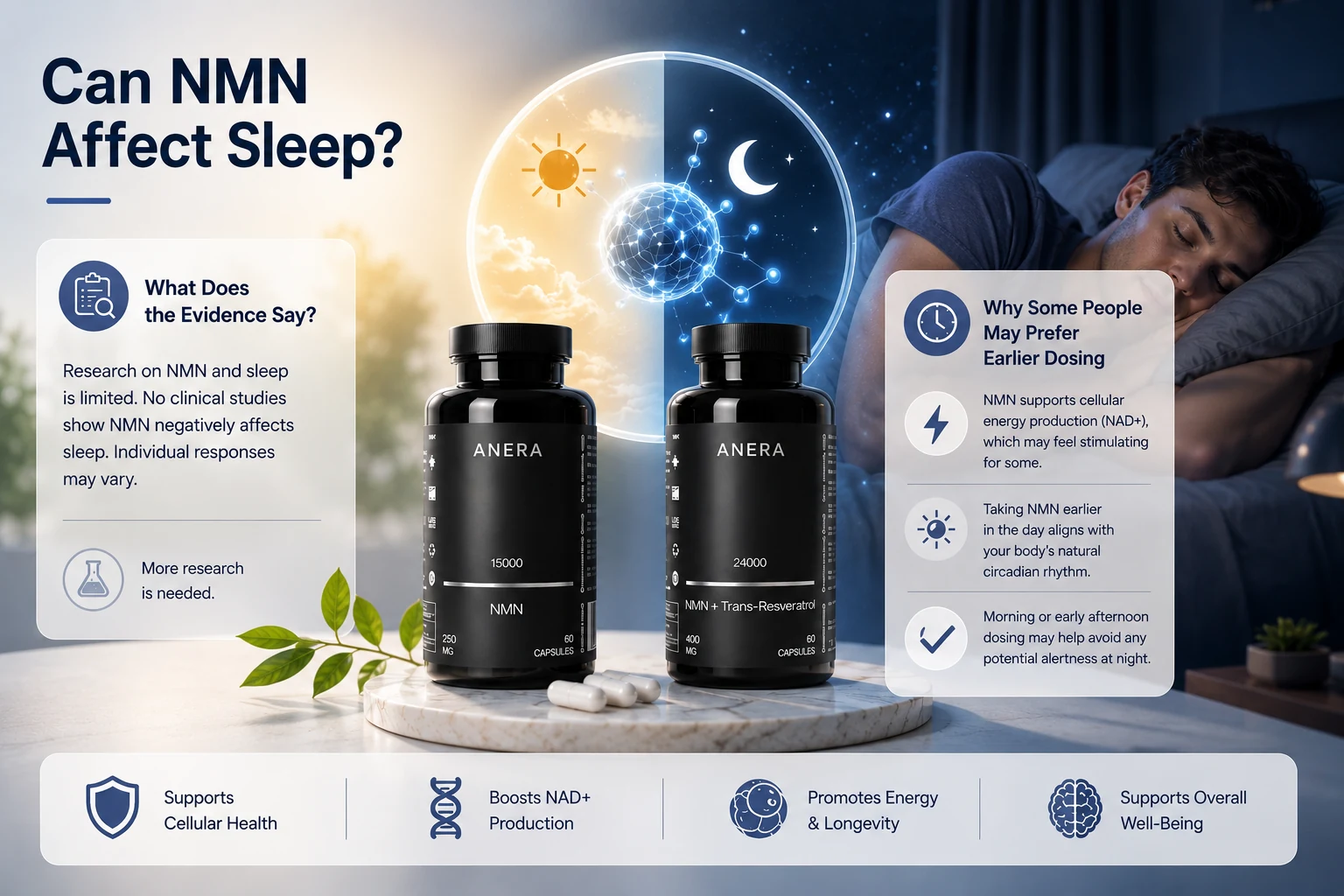
One of the most common concerns about NMN at night is whether it can affect sleep. Current evidence does not establish that NMN universally causes insomnia or improves sleep. Research is still developing, particularly around the effects of different dosing times.
NMN is mainly studied as a precursor involved in NAD⁺ metabolism, rather than as a sleep supplement. While NAD⁺ is connected with circadian biology, this does not prove that taking NMN before bed will improve or disrupt sleep.
What Does the Evidence Say?
Human studies have investigated NMN's effects on NAD-related measures and other physiological outcomes, but there is not enough evidence to conclude that nighttime NMN consistently changes sleep quality.
For this reason, claims that "NMN keeps you awake" are too definitive. If you notice changes in your sleep after taking NMN at night, consider your individual response rather than assuming the same effect applies to everyone.
Why Some People May Prefer Earlier Dosing
If evening NMN appears to coincide with increased alertness or difficulty winding down, moving it to the morning is a simple option.
Keep in mind that sleep can also be affected by caffeine, stress, exercise, screen exposure, meal timing, and other supplements. A change in sleep after taking NMN does not necessarily prove that NMN was the cause.
What Is the Best Time to Take NMN for Energy?
If your main goal is supporting normal cellular energy metabolism, morning or earlier-day dosing is a logical starting point.
NAD⁺ participates in metabolic reactions involved in cellular energy production, while NMN provides a precursor involved in NAD⁺ biosynthesis.
However, NMN should not be confused with a stimulant like caffeine. Its scientific interest comes from its role in NAD⁺ metabolism, not from providing an immediate energy boost.
Morning dosing can also be easier to maintain because it fits naturally into an established routine. If mornings are inconvenient, early afternoon may be a practical alternative.
What Is the Best Time to Take NMN for Sleep?
There is currently no strong evidence that NMN should be taken immediately before bed to support sleep.
NMN is not primarily a sleep supplement, and bedtime dosing has not been established as a reliable way to improve sleep quality. At the same time, nighttime use is not automatically inappropriate for everyone.
If you notice that late dosing affects your usual sleep routine, try moving NMN earlier in the day and monitor your response.
Should You Take NMN With Food or on an Empty Stomach?
There is no need to overcomplicate NMN timing. Follow the instructions for your specific product and choose a schedule you can maintain consistently.
If NMN causes digestive discomfort when taken on an empty stomach, taking it with food may be more comfortable. If you tolerate it well without food, there may be no practical reason to change.
The goal is consistency, not finding a perfect minute of the day.
A Simple NMN Timing Schedule
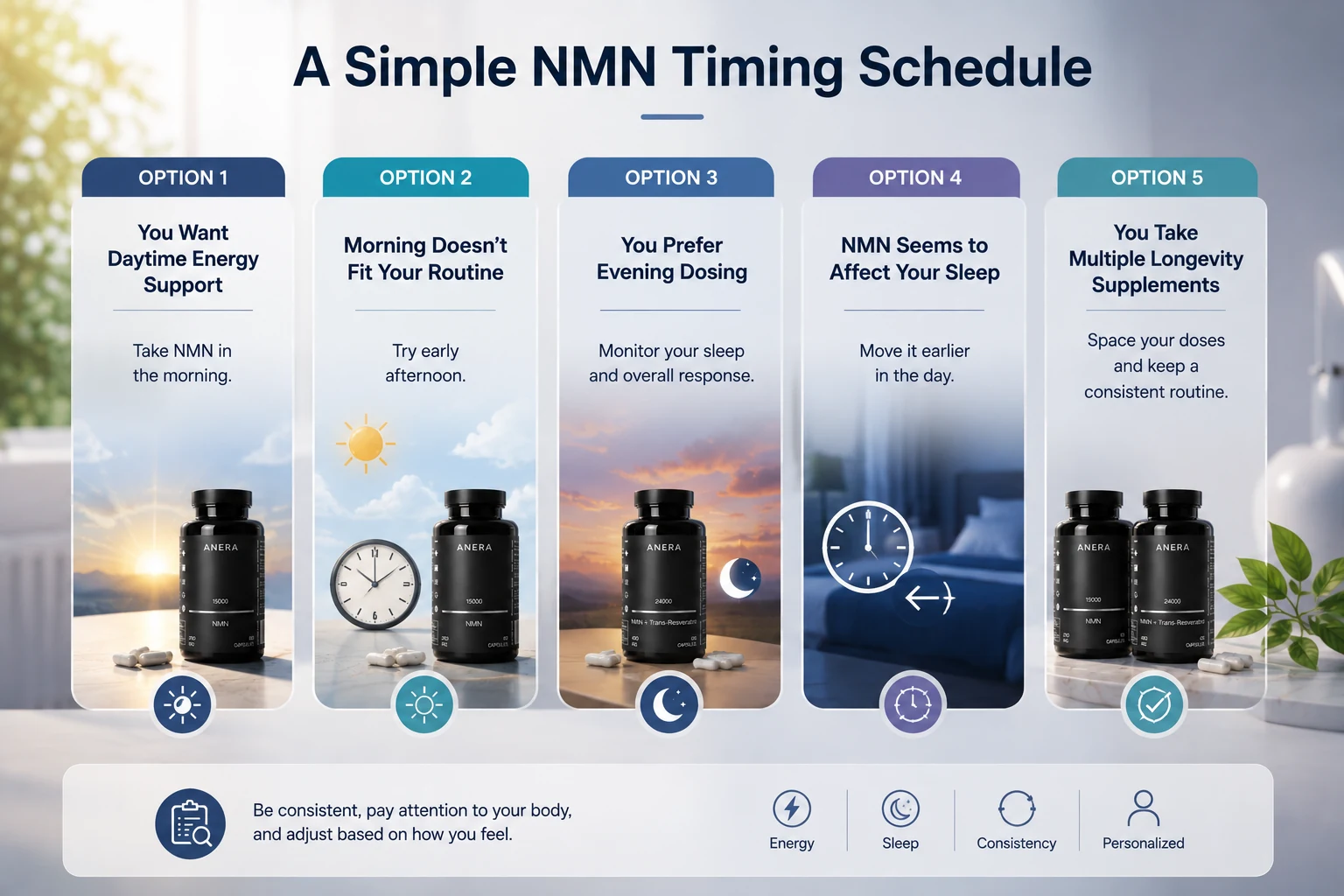
There is no universally established "perfect" time to take NMN. Instead, the best schedule is one that fits your routine and allows you to take it consistently.
Option 1: You Want Daytime Energy Support
Take NMN in the morning.
Morning is a sensible starting point if your primary goal is supporting normal cellular energy metabolism during the active part of your day. It is also easy to connect NMN with an existing habit, such as breakfast.
Option 2: Morning Doesn't Fit Your Routine
Try early afternoon.
If your mornings are busy or inconsistent, early afternoon can be a practical alternative. The most important factor is choosing a time you can follow regularly rather than repeatedly changing your schedule.
Option 3: You Prefer Evening Dosing
Monitor your sleep and overall response.
Taking NMN at night is not automatically inappropriate. If evening dosing fits your routine and you do not notice changes in sleep or alertness, it may be a convenient option.
Option 4: NMN Seems to Affect Your Sleep
Move it earlier in the day.
If you notice changes in your sleep after taking NMN later in the day, try switching to morning dosing. Keep the rest of your routine relatively consistent so you can better understand whether the timing change makes a difference.
Option 5: You Take Multiple Longevity Supplements
Consider your entire supplement routine rather than looking at NMN in isolation. Caffeine, other supplements, meal timing, exercise, and sleep habits can all influence how you feel throughout the day.
How to Build a Consistent NMN Routine
Once you decide when to take NMN, consistency is often more practical than constantly adjusting the timing.
Start by choosing a repeatable time that fits naturally into your day. Follow the directions for your specific product and avoid changing several parts of your routine at once.
If you are experimenting with timing, keep track of simple observations such as your daytime energy, alertness, and sleep quality. This can help you identify whether morning, afternoon, or evening dosing works best for your lifestyle.
It is also worth remembering that individual experiences can vary. A timing schedule that works well for one person may not feel equally suitable for another.
Your Routine Matters More Than Finding a "Perfect" Hour
There is currently insufficient evidence to identify one universally optimal time for NMN. Instead of worrying about whether 7 AM is better than 8 AM or whether evening dosing is automatically wrong, focus on building a routine you can maintain.
Consistency, appropriate product use, and awareness of your individual response are more practical than chasing a perfect hour.
Final Takeaway
Morning or earlier in the day is a sensible starting point for most people, particularly when daytime energy metabolism is the main focus. However, nighttime NMN is not automatically inappropriate, and current evidence does not establish a universal bedtime risk.
The best approach is to consider your individual routine and response. If evening dosing works well for you without affecting sleep, there may be no immediate reason to change it. If you notice changes in sleep or alertness, moving NMN earlier in the day is a simple option.
Ultimately, NMN timing is only one part of a consistent supplementation routine. Follow product directions, avoid making unsupported assumptions from biological mechanisms, and give your routine enough consistency to evaluate how it fits your lifestyle.
Frequently Asked Questions About NMN Timing
What Is the Best Time to Take NMN?
Morning or earlier in the day is a practical starting point, particularly for people interested in daytime energy metabolism. However, there is not enough evidence to establish one universally best time for everyone.
Can You Take NMN at Night?
Yes. NMN can be taken at night, although earlier dosing may be preferable if you notice changes in alertness or sleep. Current evidence does not establish that nighttime NMN is universally harmful.
Can I Take NMN Before Bed?
You can, but there is no strong evidence that taking NMN immediately before bed provides a specific sleep benefit. If bedtime dosing appears to affect your sleep, consider moving it earlier.
What Is the Best Time to Take NMN for Energy?
Morning or earlier-day dosing is a logical starting point for people focused on daytime energy metabolism. NMN is not a stimulant like caffeine; its role relates to NAD⁺ metabolism and cellular processes.
Can I Take NMN in the Afternoon?
Yes. Early afternoon can be a practical option if morning dosing does not fit your schedule. Choose a consistent time and monitor how you respond rather than constantly changing your routine.
Should I Take NMN Every Day?
Follow the directions provided with your specific NMN product. If you choose to use NMN regularly, maintaining a consistent routine is generally more practical than frequently changing your timing.
Explore Anera Life NMN
Looking for a straightforward way to add NMN to your daily wellness routine? Anera Life offers quality-focused NMN formulas designed to fit easily into a consistent daily routine.
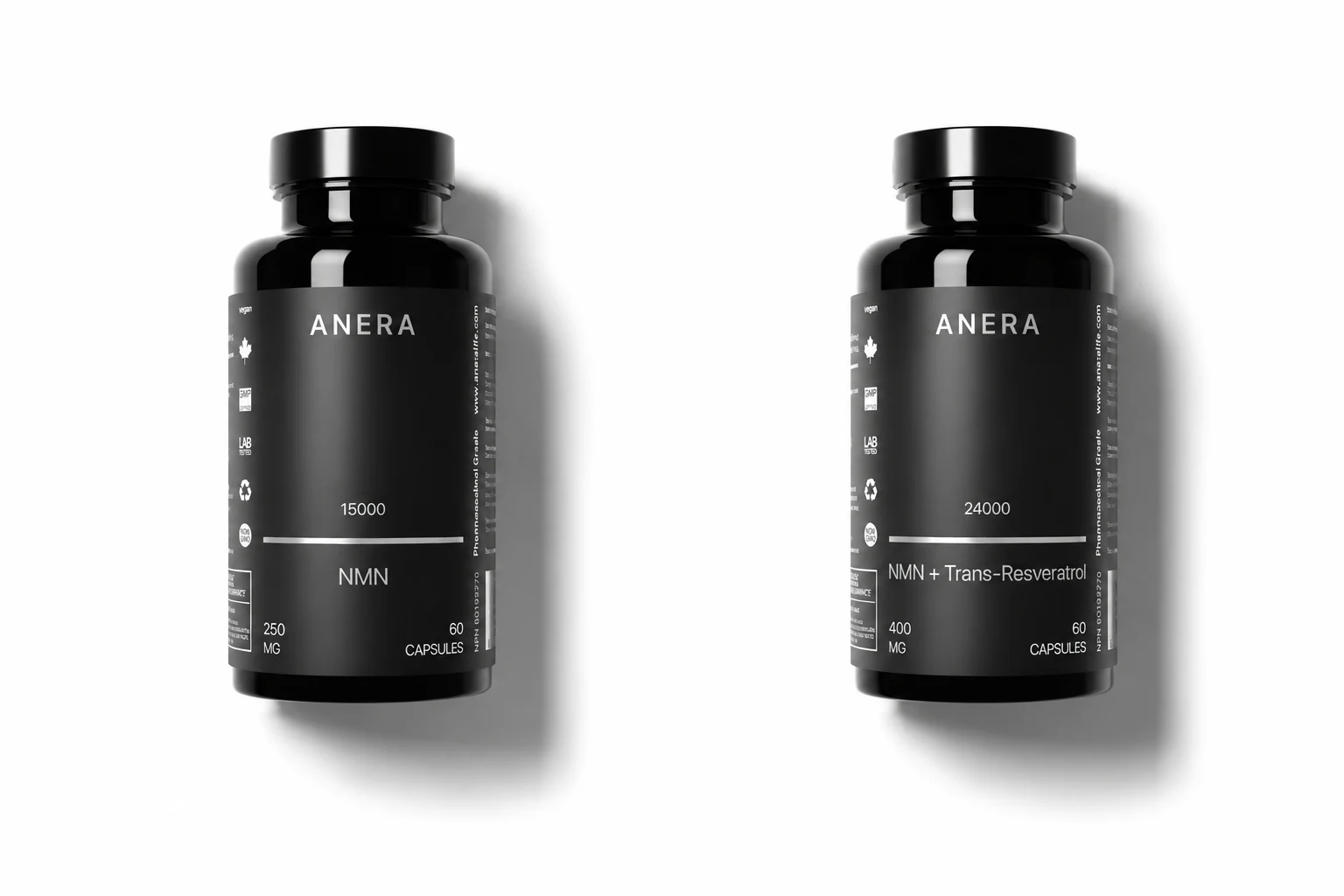
Explore Anera Life NMN options and choose the formula that best fits your personal wellness goals.