NMN vs NAD: What's the Difference and Which Is Better?
Aging naturally affects many biological processes, including the body's ability to produce and maintain nicotinamide adenine dinucleotide (NAD+), a coenzyme essential for cellular energy production, DNA repair, and healthy metabolic function. As NAD+ levels gradually decline with age, researchers have become increasingly interested in nutrients that may help support healthy NAD+ production one of the most studied being nicotinamide mononucleotide (NMN).
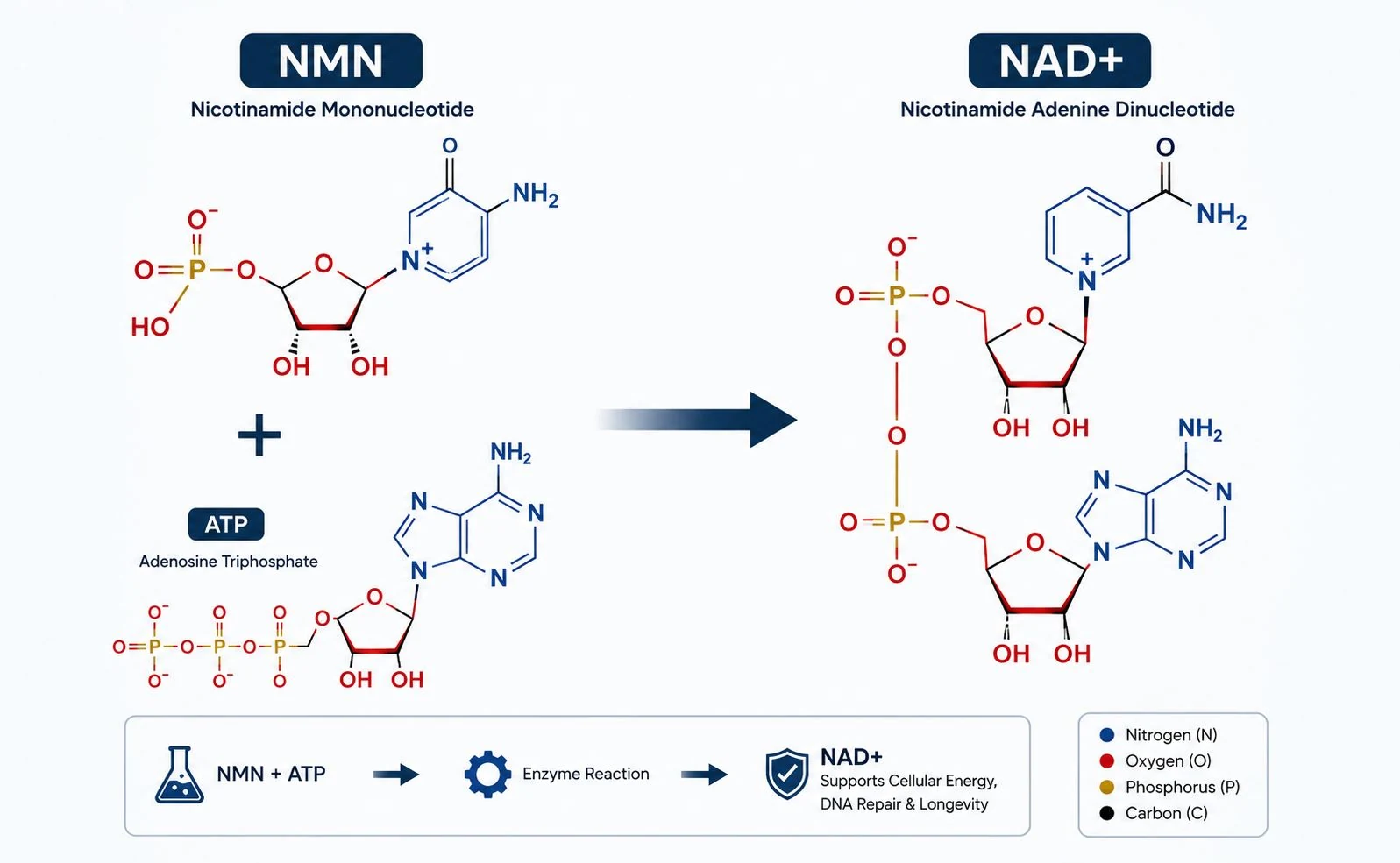
Although NMN and NAD+ are closely connected, they are not the same molecule. NAD+ is the active coenzyme that powers countless cellular processes, while NMN acts as one of its primary precursors. In simple terms, the body can convert NMN into NAD+ through natural biological pathways. Understanding this relationship is important for anyone researching healthy aging supplements, cellular health, or longevity science.
In this guide, we'll explain the difference between NMN and NAD, how NMN converts to NAD+, what current research says, and whether one option may be more practical than the other depending on your wellness goals.
What Is NAD+?
Nicotinamide adenine dinucleotide (NAD+) is a naturally occurring coenzyme found in every living cell. It plays a vital role in converting nutrients into cellular energy (ATP), supporting mitochondrial function, and maintaining normal metabolic processes. Because nearly every organ depends on healthy cellular activity, NAD+ is essential for overall health and wellness.
In addition to energy production, NAD+ supports DNA repair by helping enzymes identify and repair everyday cellular damage caused by normal metabolism and oxidative stress. It is also required for the activity of sirtuins, a family of proteins involved in cellular maintenance, stress response, and healthy aging.
As we age, NAD+ levels naturally decline due to factors such as aging, oxidative stress, inflammation, and lifestyle changes. This reduction has made NAD+ a major focus of longevity research, with scientists exploring ways to support the body's natural NAD+ production. One promising approach involves NAD precursors, such as NMN, which the body can convert into NAD+ through its natural biological pathways.
What Is NMN?
Nicotinamide mononucleotide (NMN) is a naturally occurring compound derived from vitamin B3 and one of the body's primary NAD precursors. Rather than acting as NAD+ itself, NMN provides cells with a building block that can be converted into NAD+ through the body's normal biosynthesis pathway.
NMN is naturally present in the body and is also found in small amounts in foods such as broccoli, edamame, avocados, cabbage, and tomatoes. However, these dietary sources contain relatively low amounts compared with the quantities commonly studied in clinical research, which has contributed to growing interest in NMN supplements.
Today, NMN is widely studied for its role in supporting healthy NAD+ levels, cellular energy, mitochondrial function, and healthy aging. While research continues to evolve, scientists generally view NMN as one of the most promising NAD booster compounds because it works with the body's natural pathways rather than replacing NAD+ directly.
How NMN Becomes NAD+ in the Body
Understanding how NMN becomes NAD+ helps explain why these two molecules are closely related but serve different functions. While NAD+ is the active coenzyme that supports cellular processes, NMN acts as one of the body's primary precursor molecules used to produce NAD+ naturally.
The conversion process begins after NMN is absorbed into the body. Specialized transporters help move NMN into cells, where it enters the NAD+ biosynthesis pathway. Through enzyme-driven reactions, NMN is converted into NAD+, making it available for essential biological functions such as cellular energy production, DNA repair, and metabolic regulation.
A simplified overview of this process looks like this:
NMN → Cellular Absorption → NAD+ Biosynthesis → NAD+ → Cellular Energy → DNA Repair → Healthy Cellular Function
Because this pathway mirrors the body's natural biology, researchers are investigating NMN as a practical way to support healthy NAD+ levels. However, it's important to remember that the body's ability to produce and use NAD+ depends on many factors, including age, lifestyle, nutrition, and overall metabolic health.
NMN vs NAD+: Key Differences at a Glance
Although they're closely connected, NMN and NAD+ are not interchangeable. NMN serves as a precursor, while NAD+ is the final coenzyme used by cells. The table below highlights their primary differences.
| Feature | NMN | NAD+ |
|---|---|---|
| Molecule Type | NAD+ precursor | Cellular coenzyme |
| Primary Role | Building block for NAD+ | Supports cellular energy and metabolic processes |
| Naturally Found | Yes | Yes |
| Supplement Availability | Commonly available | Available in some formulations |
| Cellular Entry | Readily enters cells before conversion | Direct cellular uptake is more complex |
| Primary Purpose | Helps support NAD+ production | Powers essential cellular functions |
| Research Focus | Healthy aging and NAD+ support | Energy metabolism, DNA repair, and longevity biology |
This comparison illustrates why discussions around NMN vs NAD+ often focus on how efficiently each compound participates in the body's natural processes rather than viewing them as competing supplements.
Why Do NAD+ Levels Decline With Age?
Scientists have consistently observed that NAD+ levels gradually decrease as people age. While aging is the primary factor, several biological and lifestyle-related influences may also contribute to this decline.
Some of the most common factors include:
- Natural aging, which reduces the body's ability to maintain NAD+ production.
- Oxidative stress, caused by an imbalance between free radicals and antioxidant defenses.
- Chronic inflammation, which may increase cellular demand for NAD+.
- Poor sleep quality, which can affect normal metabolic and cellular repair processes.
- Lifestyle habits, including limited physical activity and an unbalanced diet.
- Metabolic changes that naturally occur over time.
Because NAD+ is continuously used and recycled within cells, maintaining healthy levels becomes increasingly challenging with age. This has led researchers to investigate NAD precursor molecules like NMN as one potential strategy for supporting the body's natural NAD+ production.
Why NMN Supplements Receive More Attention
Both NMN and NAD+ play important roles in cellular health, but in recent years, NMN supplements have received significantly more attention from researchers, healthcare professionals, and consumers. The primary reason is that NMN is a direct precursor to NAD+, meaning the body can naturally convert it into the coenzyme needed for essential cellular processes.
Unlike NAD+, which is a relatively large molecule, NMN is more readily utilized through the body's natural NAD+ biosynthesis pathway. After absorption, NMN enters cells and is converted into NAD+, where it can participate in energy metabolism, DNA repair, and other biological functions. This natural conversion process has made NMN one of the most extensively studied NAD booster compounds.
Another reason for NMN's growing popularity is the increasing number of human clinical studies exploring its role in healthy aging. While research is still evolving, early studies have investigated how supporting NAD+ production with NMN may influence cellular energy, metabolic health, and physical function in healthy adults. Although more long-term research is needed, these findings have contributed to the widespread interest in NMN supplements among longevity enthusiasts and wellness-focused consumers.
Potential Benefits Associated with Supporting Healthy NAD+ Levels
Research suggests that maintaining healthy NAD+ levels may support several important biological functions. While scientists continue to investigate these potential benefits, current evidence indicates that NAD+ plays a central role in normal cellular health and metabolism.
Cellular Energy
NAD+ is essential for producing adenosine triphosphate (ATP), the primary energy source used by every cell. Healthy NAD+ levels help support efficient energy production, allowing cells to perform their normal functions.
Healthy Aging
Since NAD+ naturally declines with age, researchers are exploring whether supporting its production through NAD precursors like NMN may help maintain normal cellular function as part of healthy aging. Current evidence is promising, but more long-term human studies are required.
Mitochondrial Function
Mitochondria depend on NAD+ to convert nutrients into usable energy. Supporting healthy NAD+ availability may help maintain normal mitochondrial efficiency, an important aspect of overall cellular health.
DNA Repair
NAD+ is required by enzymes involved in repairing everyday DNA damage caused by normal metabolism and environmental stress. These repair mechanisms help preserve genomic stability and healthy cell function.
Cognitive Health
The brain requires significant amounts of cellular energy to function properly. Researchers are investigating whether maintaining healthy NAD+ levels may support normal cognitive function during aging, although definitive conclusions cannot yet be drawn.
Metabolic Health
NAD+ participates in numerous metabolic pathways related to glucose and fat metabolism. Ongoing studies are examining how NAD+ support may contribute to healthy metabolic function in adults.
Muscle Function and Exercise Recovery
Healthy muscles require efficient energy production. Early research suggests that maintaining adequate NAD+ levels may help support normal muscle function and post-exercise recovery, though additional human studies are needed to confirm these findings.
What Does Current Research Say?
Interest in NMN vs NAD continues to grow as researchers investigate how supporting NAD+ production may influence healthy aging and cellular function.
Animal Research
Animal studies have shown that increasing NAD+ levels through precursor molecules like NMN may support mitochondrial function, energy metabolism, and various markers of healthy aging. While these findings provide valuable insights, results from animal models do not always translate directly to humans.
Human Clinical Studies
Several small human clinical trials have evaluated NMN supplementation in healthy adults. These studies have generally reported that NMN is well tolerated and can increase NAD+ levels in the body. Researchers have also explored outcomes related to physical performance, metabolic health, and insulin sensitivity, although the evidence remains preliminary.
Ongoing Research
Scientists continue to study NMN in larger and longer-duration clinical trials to better understand its safety, effectiveness, optimal dosage, and long-term impact on healthy aging. As research expands, our understanding of NMN's role in supporting NAD+ production is expected to become clearer.
Research Limitations
Although current findings are encouraging, it's important to recognize that longevity science is still developing. Many human studies involve relatively small participant groups and short study periods. More robust clinical research is needed before drawing definitive conclusions about long-term health outcomes.
NMN vs NAD+: Which Is Better?
When comparing NMN vs NAD+, the answer depends largely on what you're trying to achieve. These molecules are not competitors they work together as part of the same biological pathway.
If the goal is to support the body's natural production of NAD+, NMN is often the focus of scientific research because it serves as a direct precursor that cells can convert into NAD+. This natural conversion pathway has made NMN one of the most widely studied ingredients in healthy aging supplements.
On the other hand, NAD+ itself is the active coenzyme responsible for cellular energy production, DNA repair, and numerous metabolic processes. However, researchers continue to investigate how effectively orally consumed NAD+ is absorbed and utilized by the body compared with precursor compounds like NMN.
Based on the current evidence, many researchers consider NMN a practical approach for supporting healthy NAD+ levels because it aligns with the body's natural biosynthesis process. That said, ongoing human studies will continue to refine our understanding of both compounds, and future research may provide additional insights into their respective roles in healthy aging.
Who Might Consider Learning More About NMN?
Interest in NMN supplements has grown steadily as more people explore science-backed approaches to support healthy aging and cellular wellness. While research is still ongoing, NMN may be of interest to adults who want to better understand how the body naturally produces NAD+ and how this process relates to overall cellular function.
Individuals who may consider learning more about NMN include:
- Adults interested in healthy aging who want to support long-term cellular health through evidence-based nutrition.
- Active individuals looking to maintain normal energy metabolism and mitochondrial function as part of a healthy lifestyle.
- Longevity enthusiasts and biohackers who follow emerging research on NAD+ biology and cellular aging.
- Wellness-focused consumers researching supplements that support metabolic and cellular health.
- People exploring NAD+ support who want to understand the difference between taking NAD+ directly and using an NAD precursor like NMN.
It's important to remember that no supplement can replace a balanced diet, regular exercise, quality sleep, or other healthy lifestyle habits. Anyone considering a new supplement should consult a qualified healthcare professional, especially if they have underlying medical conditions, are pregnant or breastfeeding, or take prescription medications.
Final Thoughts
When comparing NMN vs NAD, it's helpful to think of these compounds as partners rather than competitors. NAD+ is the essential coenzyme that supports cellular energy production, DNA repair, and many of the biological processes that keep cells functioning efficiently. NMN, meanwhile, is one of the body's primary precursor molecules, helping support the natural production of NAD+.
As NAD+ levels naturally decline with age, researchers continue to explore NMN as a promising way to support healthy NAD+ levels through the body's normal biological pathways. While current findings are encouraging, more large-scale human studies are needed to better understand the long-term benefits and safety of NMN supplementation.
If you're considering an NMN supplement, choose products from trusted brands that prioritize purity, third-party testing, transparent labeling, and high manufacturing standards. Pairing quality supplements with a healthy lifestyle remains one of the best ways to support long-term wellness and healthy aging.
Frequently Asked Questions
Do I need to take NMN if I take NAD+?
Not necessarily. NMN and NAD+ have different roles. NMN is a precursor that the body converts into NAD+, while NAD+ is the active coenzyme. The right choice depends on your wellness goals and guidance from a healthcare professional.
Is NMN the same as NAD+?
No. NMN and NAD+ are different molecules. NMN is a precursor that the body naturally converts into NAD+, while NAD+ is the active coenzyme involved in cellular energy production, DNA repair, and normal metabolic function.
Does NMN increase NAD+ levels?
Current research suggests that NMN supplementation can increase NAD+ levels by supplying a precursor used in the body's natural biosynthesis pathway. However, individual responses vary, and more long-term human studies are still needed.
Can you take NAD+ directly?
Yes, NAD+ supplements are available. However, researchers are still studying how effectively oral NAD+ is absorbed and utilized. This is why many studies focus on NMN, which supports the body's natural NAD+ production.
Which is better, NMN or NAD+?
Neither is universally better because they perform different functions. NAD+ is the active coenzyme, while NMN is its precursor. Current research primarily focuses on NMN due to its role in supporting natural NAD+ biosynthesis.
Is NMN good for healthy aging?
NMN is widely studied for its potential to support healthy aging by helping maintain normal NAD+ levels. While early findings are encouraging, more large-scale human clinical trials are needed to confirm its long-term benefits and safety.
Continue Your Healthy Aging Journey with Anera Life
Understanding the connection between NMN and NAD+ is an important step toward making informed wellness decisions. If you're exploring healthy aging supplements, choose products from a trusted brand that values purity, transparency, and quality.
At Anera Life, our premium NMN supplements are manufactured to rigorous quality standards, helping you support your healthy aging journey with confidence.